
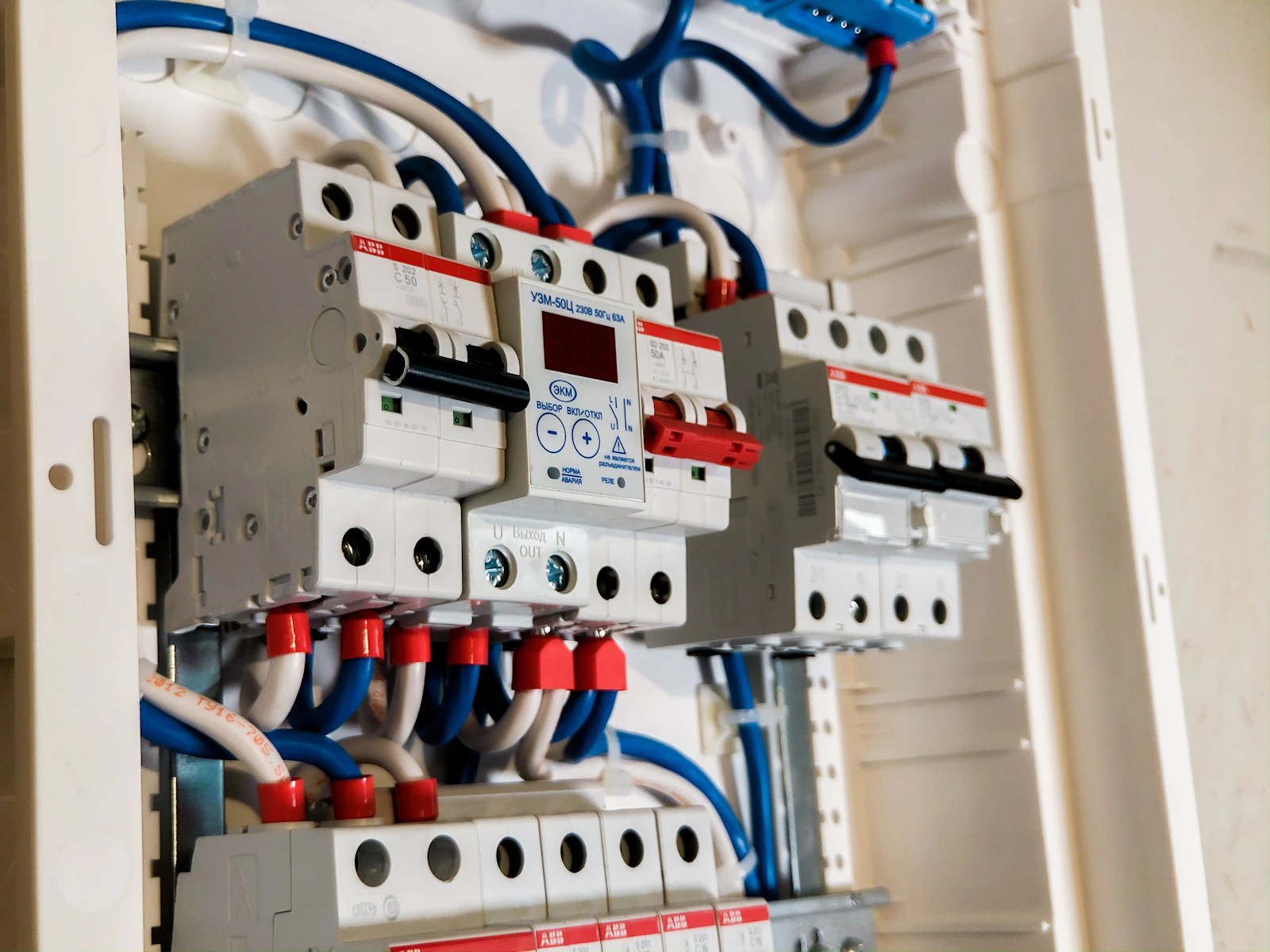
The cold is not what trips it
The common assumption is that a cold garage or a panel on an outside wall makes a breaker touchy. It works the other way. Most standard breakers overload-trip on a strip of bimetal that bends as current heats it. A breaker manufacturer's note on ambient temperature says that in conditions cooler than the calibration temperature, breakers may carry higher currents before tripping. Heat is what brings them closer to the trip point.
So replacing a breaker because the house is cold rarely fixes anything. A breaker that trips in January and never trips in July is usually reporting what you asked of the circuit in January.
The space heater is doing the math against you
Many portable heaters are rated 1,500 watts, and the label on yours will say. At 120 volts that is 12.5 amps. A 15-amp circuit tops out at 1,800 watts, so one heater leaves about 300 watts for everything else on that circuit, which is not much once you count lamps, a TV and a phone charger, and nothing at all once somebody runs a hair dryer.
This shows up in the room over the garage, the bunk room and the basement bedroom, the spaces that run cold and get a heater for the season. In an older Hailey or Bellevue house, one circuit can cover more than one room, so the outlet across the hall counts too.
The overload side of a breaker reacts to heat, so a modest overload can take a while to trip it. That is why the lights go out some time after the heater kicks on, and why it looks random. Move the heater to a circuit with less on it. Plug it straight into the wall, since the U.S. Fire Administration's advice is no extension cords on appliances, and keep anything that can burn at least three feet away.
Heat cable draws more on the coldest morning
Self-regulating roof and gutter cable changes its draw with temperature, and start-up in deep cold is its hungriest moment. One manufacturer's design guide lists a 120-volt cable at 0.120 amps per foot starting at 32°F and 0.150 amps per foot starting at 0°F. On a 15-amp breaker, its maximum run drops from 100 feet to 80 feet between those two temperatures.
That is how a circuit behaves itself through November and trips on the first truly cold morning in Ketchum. Nothing broke. A run that was laid out for a mild start, or was never laid out at all, is now past what the breaker allows. The heat tape guide covers placement and controls.
The manufacturer's guide also calls for a 30-milliamp ground-fault device on each circuit. If that device is the one tripping, it is telling you current is leaking somewhere, often at damaged cable or a wet connection. Take it seriously. It is not there to be bypassed, and swapping it for a plain breaker removes the protection against arcing that a conventional breaker may not catch.
Wet outlets and GFCI trips
A GFCI trips on current leaking to ground, not on too much load, and winter gives water plenty of ways into an outdoor box. Snow packs around a deck receptacle, the sun melts it, and the outlet trips. It may reset fine once things dry out, and trip again at the next thaw.
Unplug what is on it and reset it. If it holds with nothing plugged in, test the loads one at a time. Old light strings and damaged extension cords are worth checking first. If it will not hold with nothing plugged in, the fault is in the wiring or the box, and that is an electrician's job. One thing to check: a GFCI in a garage or outside wall may also feed other outlets, so a tripped one can quietly shut off a freezer you were not thinking about.
Reading the pattern
How and when a breaker trips narrows it down before anyone opens the panel. To reset one, push it fully off, then back on. Reset it once. If it trips again straight away with nothing new plugged in, leave it off.
| What you see | Likely cause | What to do |
|---|---|---|
| Trips some time after a heater or hair dryer comes on | Too much load on the circuit | Move the heater to another circuit, or have a circuit added |
| Heat cable circuit trips on a very cold morning | Start-up draw past the breaker, or a ground fault | Have the run length and the cable tested |
| GFCI trips after a storm or a thaw | Moisture, or a damaged cord or fixture | Unplug everything, let it dry, test one load at a time |
| Trips the moment you reset it | A short or ground fault | Leave it off and call an electrician |
| Breaker is hot, or you smell burning or hear crackling | A failing connection or breaker | Turn it off and call an electrician today |
Do not fix it with a bigger breaker
The tempting fix is a 20-amp breaker in place of the 15. Do not do it. The breaker exists to protect the wire in the wall, and the National Electrical Code limits 14-gauge copper to a 15-amp breaker and 12-gauge copper to a 20-amp breaker. A bigger breaker on the same wire lets the wire get hot enough to matter before anything trips.
The real fixes are less dramatic. Move a load, repair a fault, or run a new circuit for the thing that needs one. A new circuit takes a state electrical permit from DOPL, as covered in which jobs need a permit. If several circuits are short and the panel has no room left, that is when panel upgrades come into the conversation, but most winter trips do not get that far.
Why it matters more in a second home
In a house you live in, a tripped breaker is an annoyance you notice in a minute. In a house that sits empty, it can stay tripped for weeks. Think through what a breaker or GFCI might be feeding at your place: heat cable, pipe heat, a freezer, a boiler, a security system.
Ask your caretaker to look at the panel and the outdoor GFCIs on each visit, and to call you if something has tripped rather than just resetting it and moving on. A repeat trip while nobody is home is worth finding before the next cold snap. After an outage, check again, because everything calling for heat at once can trip a circuit that normally carries its load fine. What to do when the power goes out covers the rest.
Frequently asked questions
Does cold weather make circuit breakers trip?
Not by itself. Breakers that trip on heat from current may carry more when cold, not less. Winter trips usually come from added load, such as space heaters and heat cable, or from moisture at a GFCI.
Why does my space heater keep tripping the breaker?
A 1,500-watt heater draws 12.5 amps at 120 volts, and a 15-amp circuit tops out at 1,800 watts. Anything else on that circuit can push it over. Move the heater to a circuit with less on it and plug it straight into the wall.
Why does heat tape trip the breaker only when it is very cold?
Self-regulating cable draws more current when it starts in deep cold. One manufacturer lists a 15-amp, 120-volt circuit at 100 feet of cable for a 32°F start and 80 feet for a 0°F start, so a long run can pass in fall and trip in January. A ground fault can also be the cause.
Can I replace a 15-amp breaker with a 20-amp breaker?
Not on the same wire. The National Electrical Code limits 14-gauge copper to a 15-amp breaker. The breaker protects the wire, so a larger one lets the wire overheat before it trips.
How many times should I reset a tripped breaker?
Once. Push it fully off, then back on. If it trips again right away with nothing new plugged in, leave it off and call an electrician.
Do I need a permit to add a circuit for a space heater or heat cable?
In Blaine County a new circuit takes a state electrical permit from DOPL. Homeowners can pull their own permit for work on a home they own. If you are unsure about a specific job, ask DOPL.