
Why can't anyone just tell you what it costs?
Because the same job is three different jobs depending on the house.
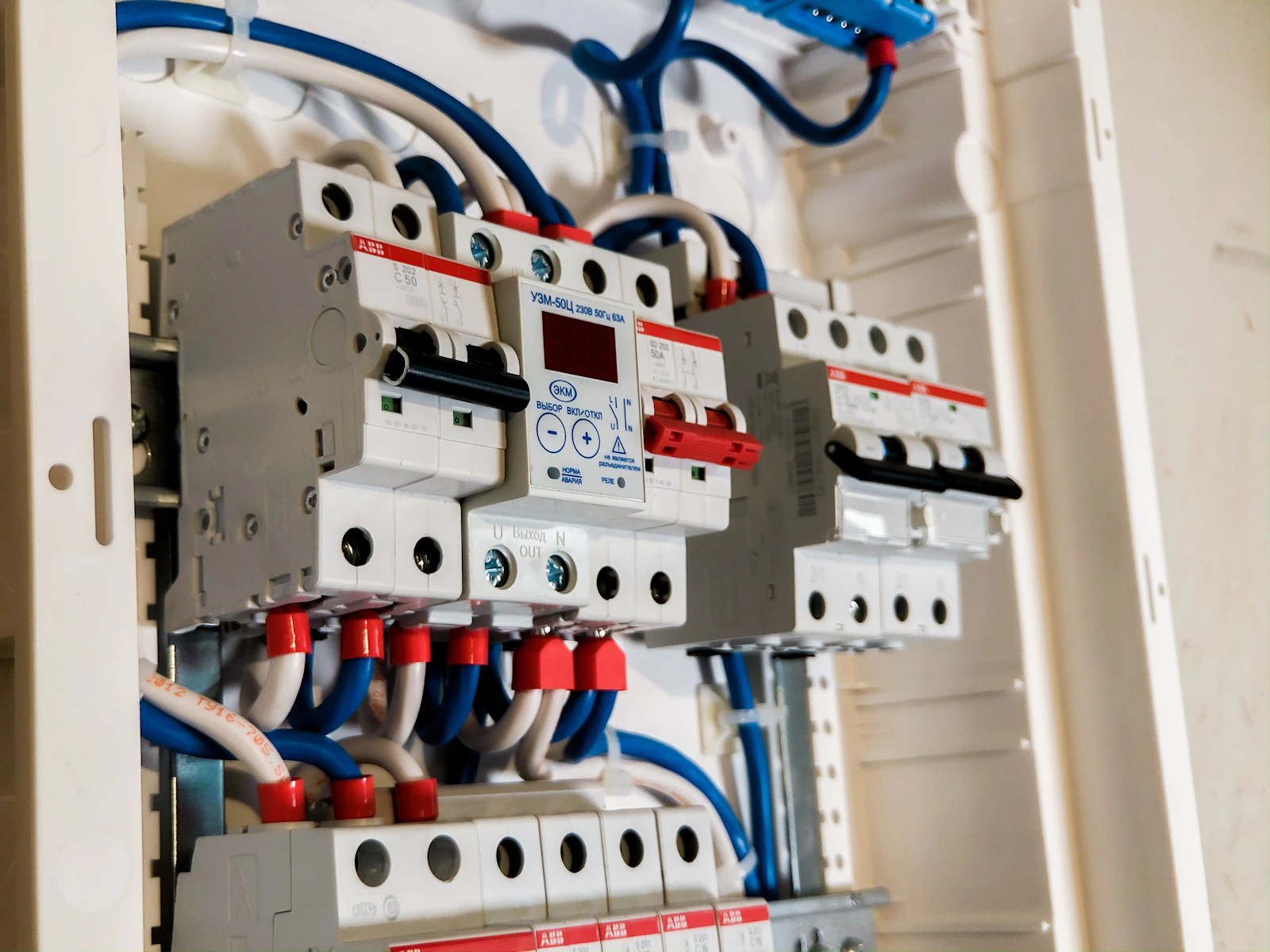
Swapping a panel in a recent build in Woodside means pulling the old one, setting the new one, moving the circuits over and calling for inspection. Swapping a panel in a 1940s place off Main Street in Hailey means finding out what the last four owners did, discovering the service entrance is undersized, and deciding whether the meter base survives being touched. Same two words on the invoice. Not remotely the same day.
An electrician who quotes you a firm price over the phone without seeing the panel is guessing. That guess usually goes one of two ways. Either it is padded so they are covered, and you overpay. Or it is tight, they hit something unexpected, and now you are having an awkward conversation halfway through a job you cannot stop.
If you want a number before anyone comes out, ask for a range with the variables attached. A good answer sounds like this: somewhere in this band if the meter base is fine, higher if it is not, and here is how I will know within ten minutes of being there.
- Small, predictable work is usually quoted flat. Adding an outlet on an existing circuit. Swapping a fixture. Replacing a failed breaker.
- Anything that opens up a wall or touches the service gets looked at first. That is not a sales tactic, it is the only way to give you a number that holds.
- The permit is separate and it is published. It does not change based on who you hire.
Who issues the electrical permit in Blaine County, and what does it cost?
The State of Idaho issues it, not the city and not the county. If you call Hailey City Hall or Blaine County Building Services about an electrical permit, they will send you to the State of Idaho electrical inspector. Both of them say so in their own permit paperwork.
The permit comes from the Idaho Division of Occupational and Professional Licenses, known as DOPL. You buy it online through DOPL's permit system, and inspections are scheduled through DOPL. Both licensed contractors and homeowners working on a home they own can pull one. Before starting, check which jobs need a permit.
The fees are set in state rule, which means they are the same in Ketchum as they are in Boise, and they do not change based on who you hire.
| Living space | Permit fee |
|---|---|
| Up to 1,500 sq ft | $130 |
| 1,501 to 2,500 sq ft | $195 |
| 2,501 to 3,500 sq ft | $260 |
| 3,501 to 4,500 sq ft | $325 |
| Over 4,500 sq ft | $325 plus $65 for each additional 1,000 sq ft or part of it |
| Two-family dwelling | $260 |
| Multi-family | $130 per building plus $65 per unit |
What does a permit cost on an existing home?
Sixty-five dollars per inspection. That covers almost all remodel and service work: a panel swap, a new circuit for a hot tub, rewiring a kitchen, adding a charger in the garage.
Two things catch people out. The permit has to be bought before the work starts, not after, and the full fee is due before final inspection. And permits expire 365 days from the day they are purchased. If a remodel drags through a winter and into the next building season, renewing costs $65. On valley projects where exterior work waits for the snow to go, this happens more than you would think.
| Item | Fee |
|---|---|
| Permit on an existing dwelling | $65 per inspection |
| Re-inspection, if the work is not ready or corrections were not made | $65 |
| Renewing a permit after 365 days | $65 |
| Transferring a permit to someone else | $45 |
How are commercial permits calculated?
On the total wiring cost of the job, meaning all the labor and everything else it takes to complete the installation. Factory-assembled machinery that runs on electricity is not counted toward the total.
| Total wiring cost | Permit fee |
|---|---|
| Under $500 with no change to the service | $10 |
| Up to $10,000 | $60 plus 2% of the total |
| $10,001 to $100,000 | $260 plus 1% of the amount over $10,000 |
| Over $100,000 | $1,160 plus 0.5% of the amount over $100,000 |
Three examples you can check your own job against
These are permit fees only. They do not include labor or materials. They are worked from the state fee schedule so you can see how the number is arrived at.
A new 2,800 square foot house in Hailey falls in the 2,501 to 3,500 band, so the electrical permit is $260.
A panel swap in an existing Ketchum house is $65 if it passes first time, and $130 if a correction brings the inspector back.
A $40,000 tenant improvement in a Ketchum retail space is commercial, so it is calculated on total wiring cost. That falls in the $10,001 to $100,000 band: $260 plus 1% of the $30,000 above $10,000, which is $300. Total $560.
If your contractor's permit line is far off one of these, it is a fair question to ask why. There may be a good answer. More than one inspection trip, a separate temporary power permit on a build, a structure on the same property that needs its own. But you should get an answer.
Why does electrical work cost more here than in the Treasure Valley?
Five reasons, and none of them are that valley contractors charge resort prices because they can.
Parts are not around the corner. There is no full-line electrical supply house in the Wood River Valley. When a job turns up something unexpected, and jobs in older houses do, the part is a drive away or it is next day. An electrician in Meridian loses twenty minutes on a run for an odd breaker. Here that same problem can cost half a day or push the work to another visit. That time is in your price whether or not anyone itemizes it.
Winter decides the schedule. Anything touching the exterior, the meter base, a service mast, a trench for a detached garage or shop, has a season. Frozen ground does not get trenched. A service change in February is a different job than the same service change in July. If your work can wait for spring, ask whether waiting saves you money. Sometimes it does.
The housing stock is split. The valley has 1940s and 1950s places in Hailey and Bellevue sitting alongside recent custom builds in Ketchum and Sun Valley. The older end comes with undersized services, cloth wiring, additions nobody permitted, and panels that stopped being made decades ago. An electrician pricing work here is pricing the risk of what is behind the drywall.
Second-home scope is different scope. A house that sits empty five months a year, with heat tape, snowmelt, freeze alarms, remote monitoring and lighting control, is a more complicated electrical system than a house someone lives in year round. More to install, more to troubleshoot, more that has to work while nobody is there to notice it failed.
The labor market is the resort labor market. A tradesperson here is competing for housing in one of the most expensive counties in Idaho. Wages reflect that. It is the same reason your plumber, your framer and your mechanic cost what they do.
None of this means you should accept any number you are given. It means that when a valley quote comes in above what a search told you to expect, the gap is usually structural, and a good electrician can explain exactly which of these five things is driving it on your job.
What should be on your estimate?
Seven things. If an estimate is missing more than one of them, ask before you sign.
On flat rate versus hourly: neither is a trick, they suit different jobs. Flat rate works when the job is known. You get certainty and the electrician carries the risk of it running long. Hourly works when nobody can know the hours yet, like troubleshooting a circuit that trips intermittently. On that kind of work a flat quote is just a padded one, because the only way to quote it firmly is to assume the worst.
- The scope in plain words. "Upgrade panel" is not a scope. "Replace existing 100-amp panel with 200-amp panel, same location, reconnect existing circuits" is.
- The permit as its own line. It is a published state fee and should not be buried in a labor number.
- What is excluded. Drywall repair, painting, trenching, anything the utility has to do.
- The condition the price depends on, and what happens if the meter base turns out to be shot or the service entrance is undersized.
- Who is doing the work and under whose license. Idaho licenses electricians through DOPL and you can look a license up.
- How change orders work, and whether you approve the cost before the work continues.
- The inspection. Who calls for it, and who pays the $65 if it fails.
Frequently asked questions
Who issues electrical permits in Hailey and Ketchum?
The State of Idaho, through the Division of Occupational and Professional Licenses. Not the city, not Blaine County. Blaine County Building Services and the City of Hailey both direct applicants to the state electrical inspector.
How much is an electrical permit in Blaine County?
On an existing home it is $65 per inspection. On new construction it is based on square footage, starting at $130 for up to 1,500 square feet and rising to $325 for 3,501 to 4,500 square feet. Commercial work is calculated on the total wiring cost of the job.
Can I pull my own electrical permit in Idaho?
Yes. DOPL issues permits to homeowners doing electrical work on a home they own, as well as to licensed contractors. The work still has to pass state inspection, and the same code applies to you as to a contractor.
Do I need a permit to replace an outlet or a light fixture?
Permit requirements depend on the work, and the safest answer is to ask DOPL before you start rather than after. The cost of asking is a phone call. The cost of not asking is discovering it at resale or at a claim.
Why is a quote here higher than the number I found online?
National cost guides have no Blaine County data in them, and they disagree with each other by several times on the same job. Local pricing reflects supply runs out of the valley, winter access on exterior work, older housing stock in Hailey and Bellevue, and resort-market labor costs.
What happens if the work fails inspection?
The corrections get made and the inspector comes back. A re-inspection is $65. Your estimate should say who pays it, and on work done by a licensed contractor that is normally the contractor.
How long is an electrical permit good for?
365 days from the date it is purchased. If the job runs past that, renewing costs $65. This comes up on valley projects where exterior work waits out a winter.
Should I get more than one quote?
For anything substantial, yes. Compare scope and exclusions rather than just the total, because the cheapest number is often the one that left the most out. Check that both quotes include the permit, and that both name the license the work is being done under.